You sourced organic cotton, you cut waste, you wrote a sustainability page — and then a standard virgin-polyester tag goes in the neck. For an eco-conscious brand, the label is the last place the story can break. The good news: labels now come in genuinely lower-impact materials that look and feel premium.
This guide covers the sustainable label materials available, their trade-offs, and — just as important — how to word your sustainability claims so they're honest and greenwashing-proof.
At a glance — the eco label options
There's no single "greenest" material — the right one matches your fabric, your priorities and the claim you can honestly stand behind.
Option 1 — Organic cotton labels
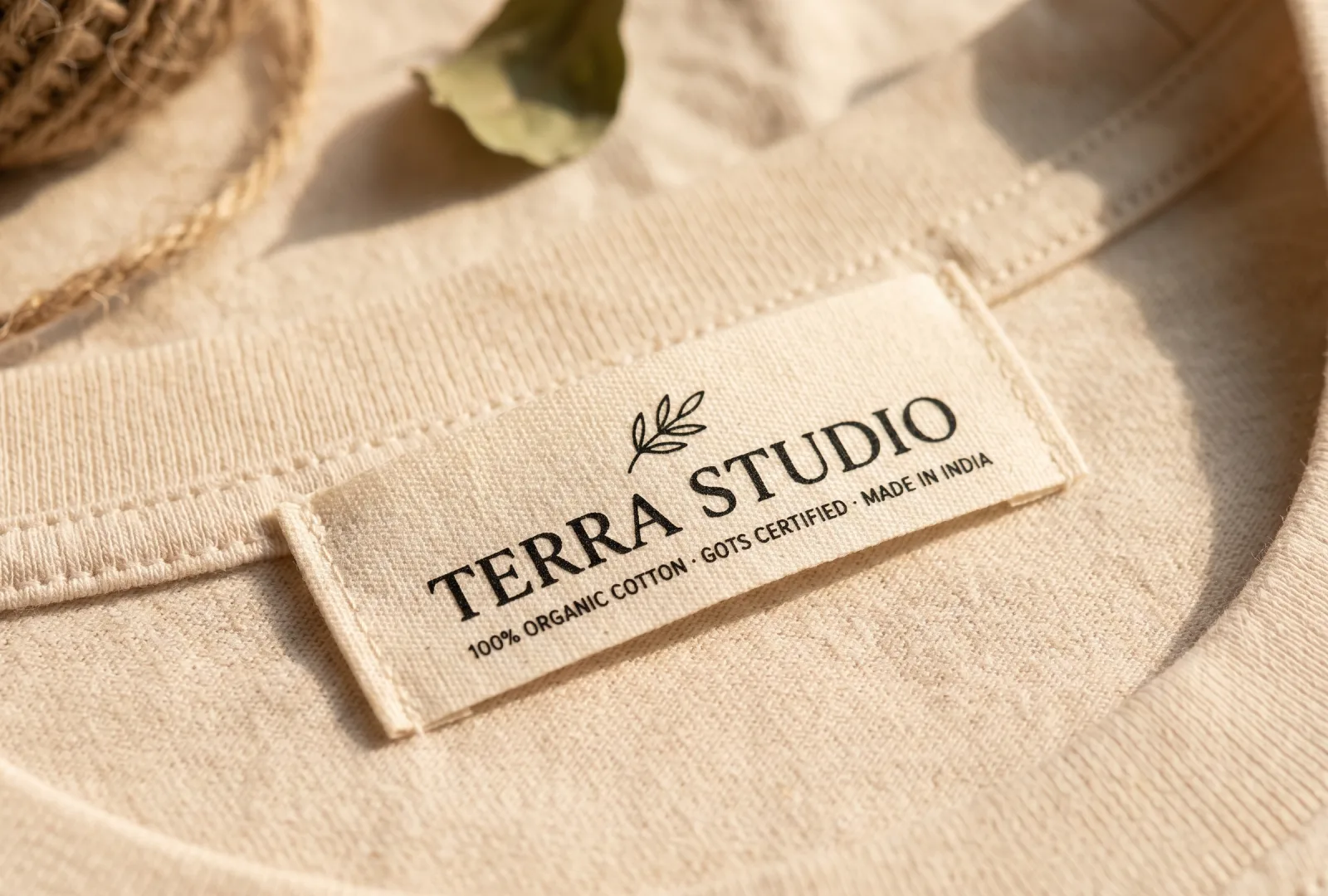
Woven or printed on organic cotton tape. Soft, natural, biodegradable, and a perfect visual match for natural-fibre garments. The default choice for brands built on a natural, earthy aesthetic.
- Made from: organic-grown cotton, often unbleached / natural tone
- Feel: soft, matte, natural — pairs beautifully with khadi, linen, organic cotton wear
- Best for: natural-fibre brands, ethnic/boutique, babywear, slow-fashion
- Note: for a certified claim you need GOTS-certified material and chain of custody
See our guide to organic cotton & eco labels in India.
Option 2 — Recycled polyester (rPET) labels
Standard-looking woven or satin labels made from recycled polyester — often spun from used plastic bottles. The lowest-friction swap: it looks and performs like normal polyester but diverts plastic from waste.
- Made from: recycled PET (rPET), e.g. post-consumer bottles
- Feel: identical to standard polyester woven/satin labels
- Best for: any brand wanting an easy, durable, lower-impact swap
- Note: GRS/RCS certification supports a "recycled content" claim
Option 3 — TENCEL / lyocell & other renewables
Labels made from wood-pulp-based fibres like TENCEL lyocell — renewable, soft, and produced in a closed-loop process. A premium, soft-handed option for brands that want a renewable story beyond cotton.
- Made from: sustainably sourced wood pulp (lyocell)
- Feel: very soft, smooth, premium
- Best for: premium sustainable fashion, soft-touch innerwear and loungewear
Which eco material fits your brand
- Natural, biodegradable look
- Pairs with natural-fibre wear
- GOTS for certified claims
- Soft, matte, earthy
- Easiest swap from standard PET
- Durable, washes like polyester
- Diverts plastic waste
- GRS/RCS for claims
- Renewable wood-based fibre
- Very soft premium hand
- Closed-loop production
- Great for soft-touch garments
- QR/NFC hosts extended care info
- Less printed on fabric
- Doubles as a product passport
- See our QR/NFC labels guide
A QR or NFC smart label is a natural partner for an eco brand — it can carry sourcing, care and recycling information digitally, reducing what must be printed and acting as a digital product passport.
How to label claims without greenwashing
The fastest way to lose customer trust — and run into misleading-claims rules — is a vague green claim you can't back up. Keep it specific and substantiated.
Say "Made with 100% recycled polyester", not just "eco" or "green".
Only claim what the actual material is. Match the claim to the certified input where possible.
GOTS for organic, GRS/RCS for recycled — applied to the supply chain, not just the tag.
A recycled label doesn't make the whole garment sustainable. Claim the part that's true.
Pro tips
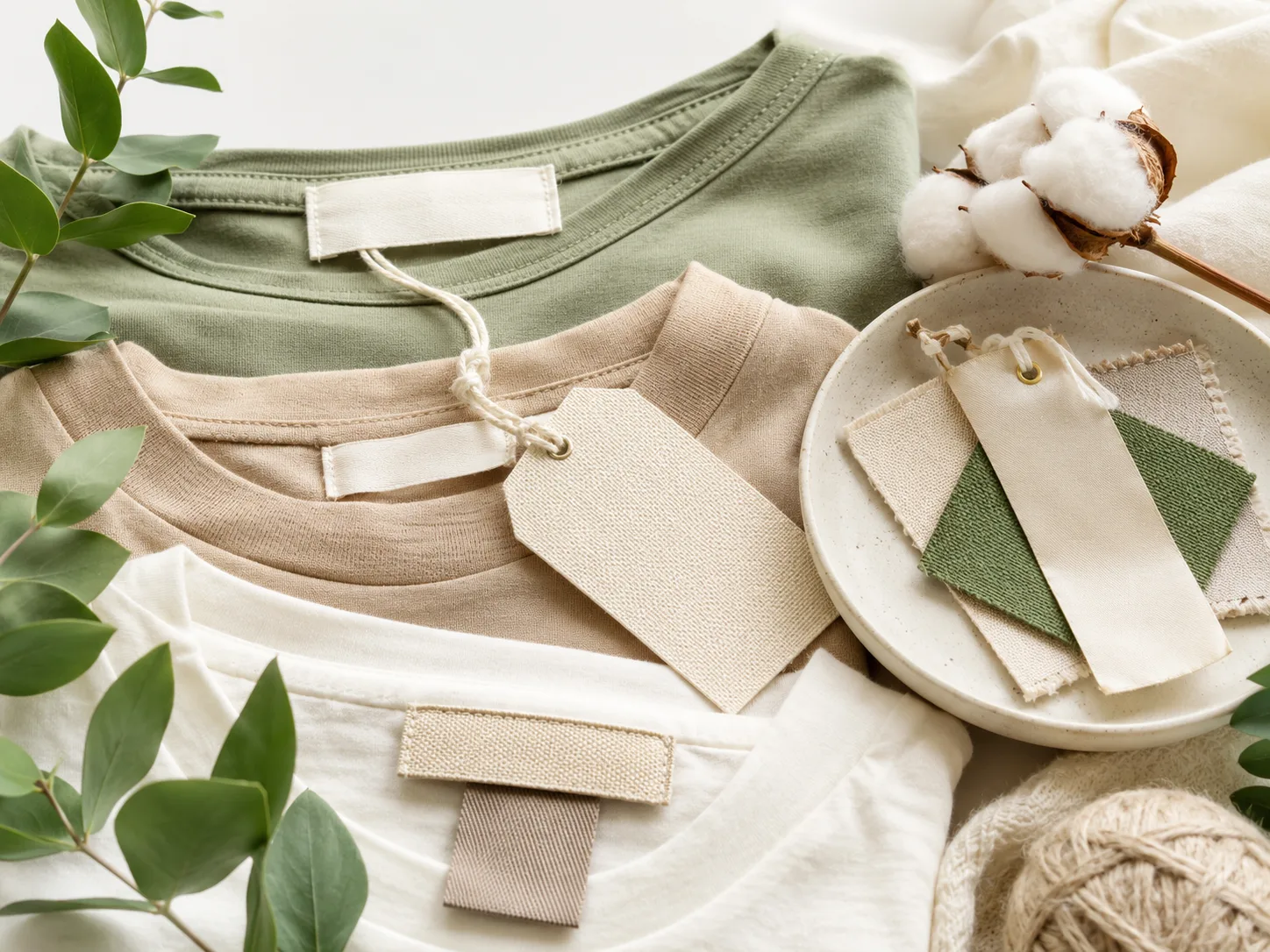
Match the label to the fabric. An organic-cotton tag on an organic-cotton garment reads as coherent; a glossy synthetic tag on natural fibre breaks the story. Coherence is what customers notice.
Durability is sustainability too. A label that fades or falls off and needs replacing isn't green. Choose a lower-impact material that still lasts the life of the garment.
Quick start: tell us your garment, your sustainability goals and any certification you hold. We'll recommend the right recycled or natural label material — and a smart tag if you want a digital passport. Message Labelwala or use the quote form.
The short answer
For a conscious brand, pick the label material that matches your garment and your story: organic cotton for a natural, biodegradable look, recycled polyester (rPET) as the easiest durable swap, or TENCEL/lyocell for a soft renewable premium feel. Pair it with a QR/NFC smart tag to carry care and recycling info digitally. Whatever you choose, label your claims specifically and back them with the real material — honest sustainability is the only kind that builds trust.