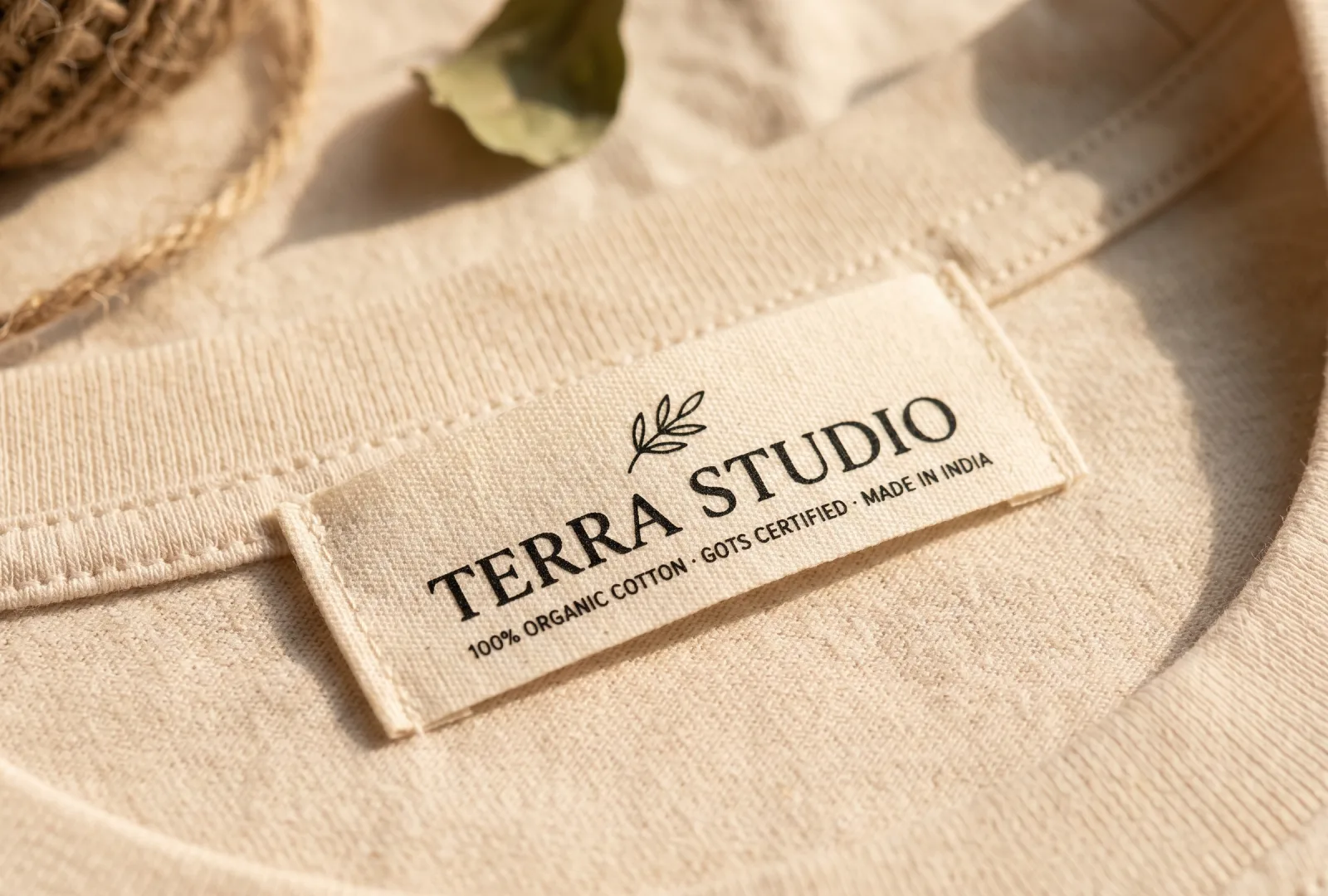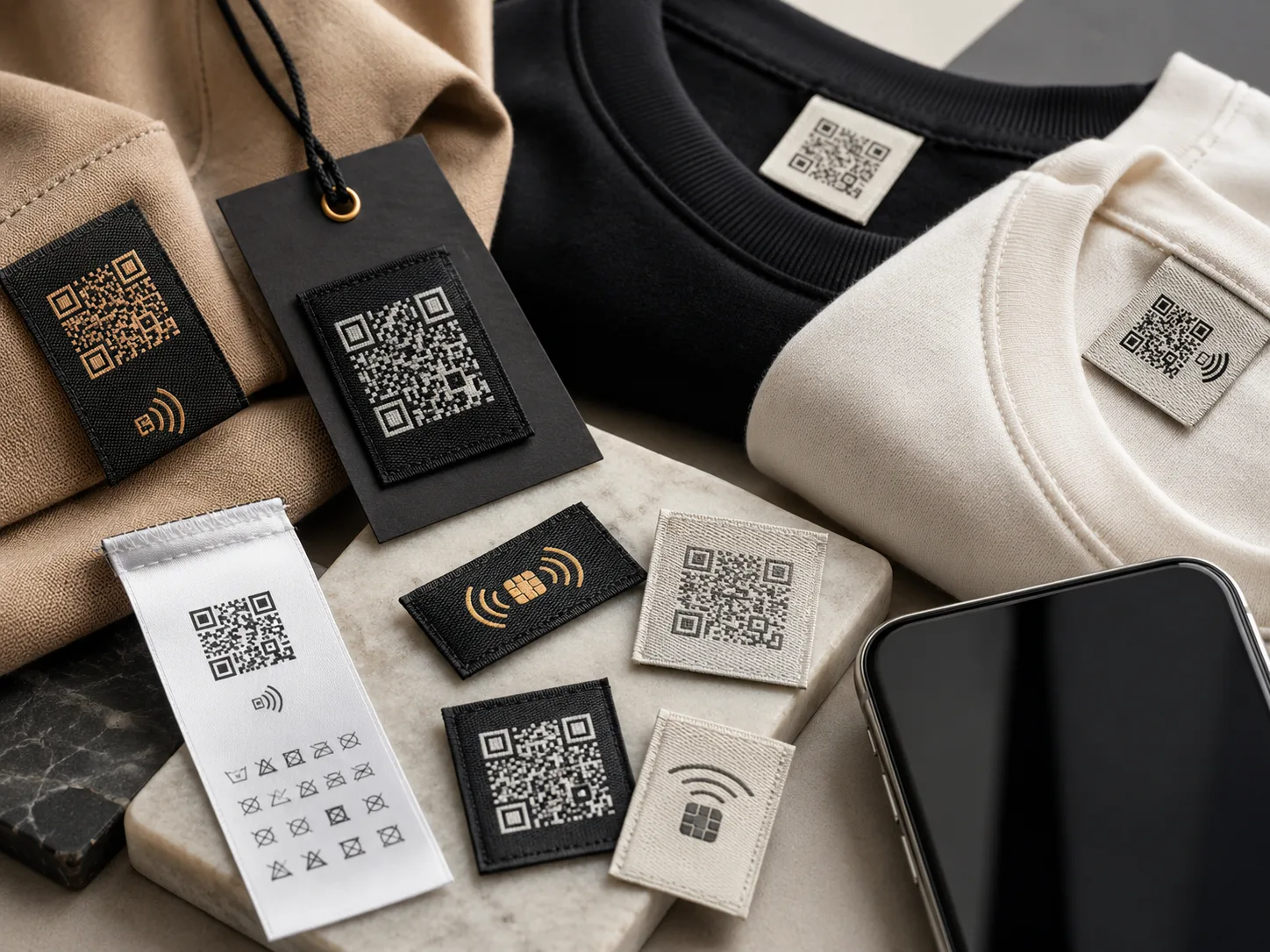
For decades a clothing label did one thing: tell you the brand and how to wash it. In 2026 it does more — it connects the garment to the internet. A woven or printed QR code, or a tiny NFC chip behind the label, turns a passive tag into a tap-to-open doorway to your brand.
Brands are using these "smart labels" for authentication, storytelling, care info, warranty and even re-orders. This guide explains how QR and NFC labels work, what they cost, where they're worth it, and how to add one to your next order.
Why smart labels in 2026
The shift is driven by three things: phones now scan QR and read NFC natively, shoppers expect a digital layer, and sustainability rules are pushing toward scannable "digital product passports." A label is the cheapest, most natural place to put that link.
QR vs NFC — how they differ
- Woven or printed onto the label
- Scanned with any phone camera
- Near-zero added cost
- Dynamic — change the destination later
- Visible part of the design
- Tiny chip behind/inside the label
- Tap phone — no scanning, no app
- Adds a per-piece chip cost
- Best for premium & authentication
- Invisible — keeps the label clean
Rule of thumb: QR for reach and low cost; NFC for premium feel and anti-counterfeit. Many brands use QR across the range and reserve NFC for hero or high-value pieces.
What you can put behind a scan
- Authentication — a unique code per garment proves it's genuine
- Care & content — full wash info and fibre detail without a long fabric label
- Brand story / film — the maker, the materials, the why
- Re-order & refill — straight to the product page for a repeat purchase
- Warranty & registration — capture the customer, offer after-sales
- Loyalty & community — sign-ups, discounts, styling content
- Digital product passport — origin, materials and recycling info for sustainability
Because the link is dynamic, you can change what the scan opens long after the garment has shipped — a sale page today, a care guide tomorrow.
Can a QR code be woven?
Yes — but it needs the right construction. A QR is just a high-contrast grid, and weaving has a minimum resolution, so a woven QR must be made larger with strong black-on-white contrast to scan reliably. The more dependable routes are:
- Printed QR on taffeta/satin — sharpest and most reliable scan, paired with a woven brand label
- Woven QR at larger size — possible for a textured, premium look when designed carefully
- NFC behind a woven label — keeps the woven look and adds tap-to-open invisibly
Always test the scan before bulk. A QR that looks fine on screen can fail when woven or printed too small. We sample and scan-test every smart label before a production run.
What smart labels cost
- Printed QR adds ~nothing over base label
- Works on the satin/taffeta you already use
- Software/landing page is a small separate cost
- Per-piece chip + encoding cost
- Justified on premium & export pieces
- Serialised chips enable authentication
For most brands, the smart move is to add a QR to existing labels at near-zero cost, then trial NFC on a premium capsule. Want a quote on a smart-label run? Use our quick quote.
How to add a smart label to your order
Pick what the scan opens — authentication, story, care or re-order — and set up a dynamic link.
QR for reach and low cost; NFC for premium tap-to-open and anti-counterfeit.
Printed taffeta/satin for a sharp QR, or a woven label with NFC behind it.
Approve a physical sample that scans reliably before committing to bulk.
Pro tips
Start with QR, earn your way to NFC. Add a QR to your existing care or brand label first. Once scans prove customers engage, add NFC to your premium line where authentication pays for itself.
Quick start: tell us your garment type and what you want the scan to do. We'll recommend QR vs NFC, the right label base, and quote a sampled, scan-tested run. Message Labelwala or use the quote form.
The short answer
Smart labels turn your garment tag into a digital touchpoint. QR codes are cheap, universal and best added to your existing printed labels — ideal for storytelling, care info and re-orders. NFC chips cost more per piece but enable tap-to-open and per-garment authentication, making them a strong fit for premium and export products. The pragmatic path for 2026: add a QR now at near-zero cost, then trial NFC on your hero pieces.