When activewear, innerwear and yoga brands ask "what's the best label for our garment," the conversation almost always splits in two: heat-press transfer (no fabric label — the brand info is printed directly onto the inside of the garment via heat and silicone or ink), or woven label (the traditional jacquard-woven fabric strip stitched into the neckline). They're built for completely different jobs but compete for the same buyer.
This guide compares them head-to-head: feel, durability, design flexibility, MOQ economics, and which garments belong on which method. By the end you'll know whether your brand should go tagless or stay traditional.
At a glance — heat-press vs woven
The choice is rarely about quality — it's about whether you want a label that touches skin at all, and how high your volumes need to be to justify the heat-press plate setup cost.
What is a heat-press tagless label?
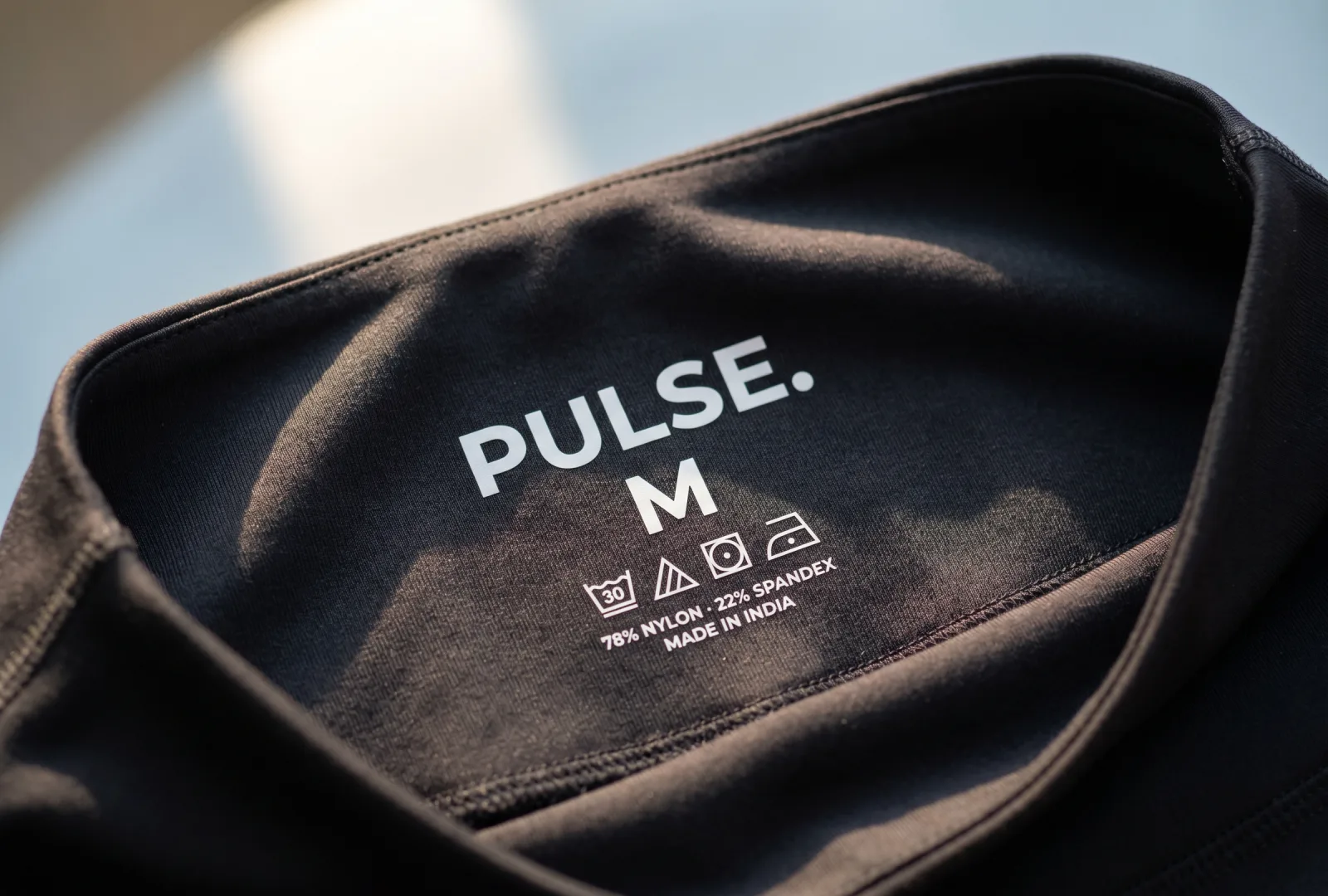
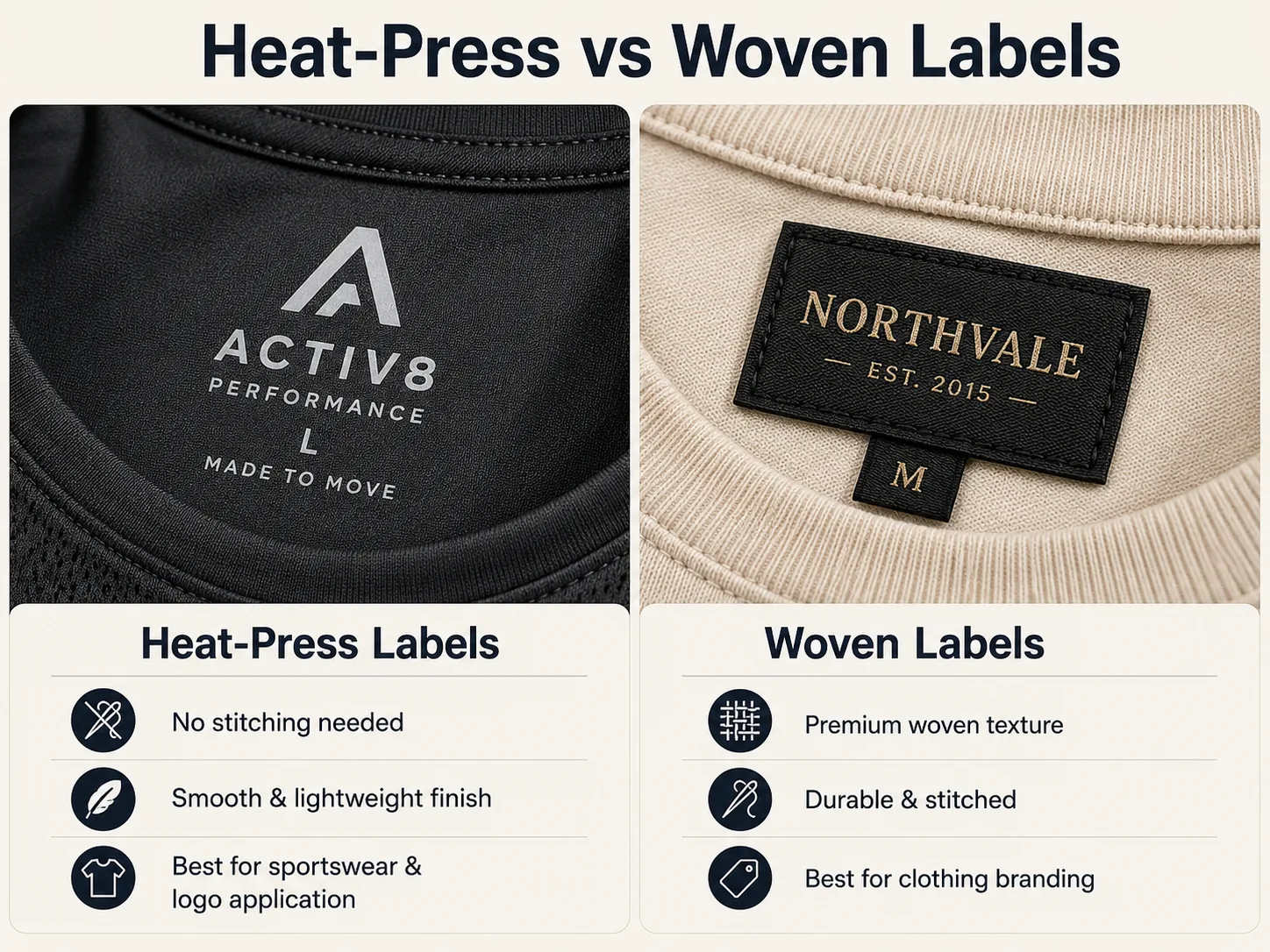
Heat-press labels aren't labels in the traditional sense — they're ink, silicone or PU directly transferred onto the inside of the garment via heat and pressure. The brand info, size and care content sit on the garment fabric itself, with nothing extra to scratch the wearer.
- Process: heat-transfer (sublimation or silicone) onto garment fabric
- Setup: requires custom plates (~₹2,500–5,000 one-time)
- Feel: zero — nothing extra, just the garment
- Best for: activewear, yoga, innerwear, athleisure, premium kidswear
- Cost: ₹0.30–4 per piece depending on volume; setup-heavy at small batches
For a deeper look at heat-press for activewear specifically, see tagless heat-press labels for activewear.
What is a woven label?
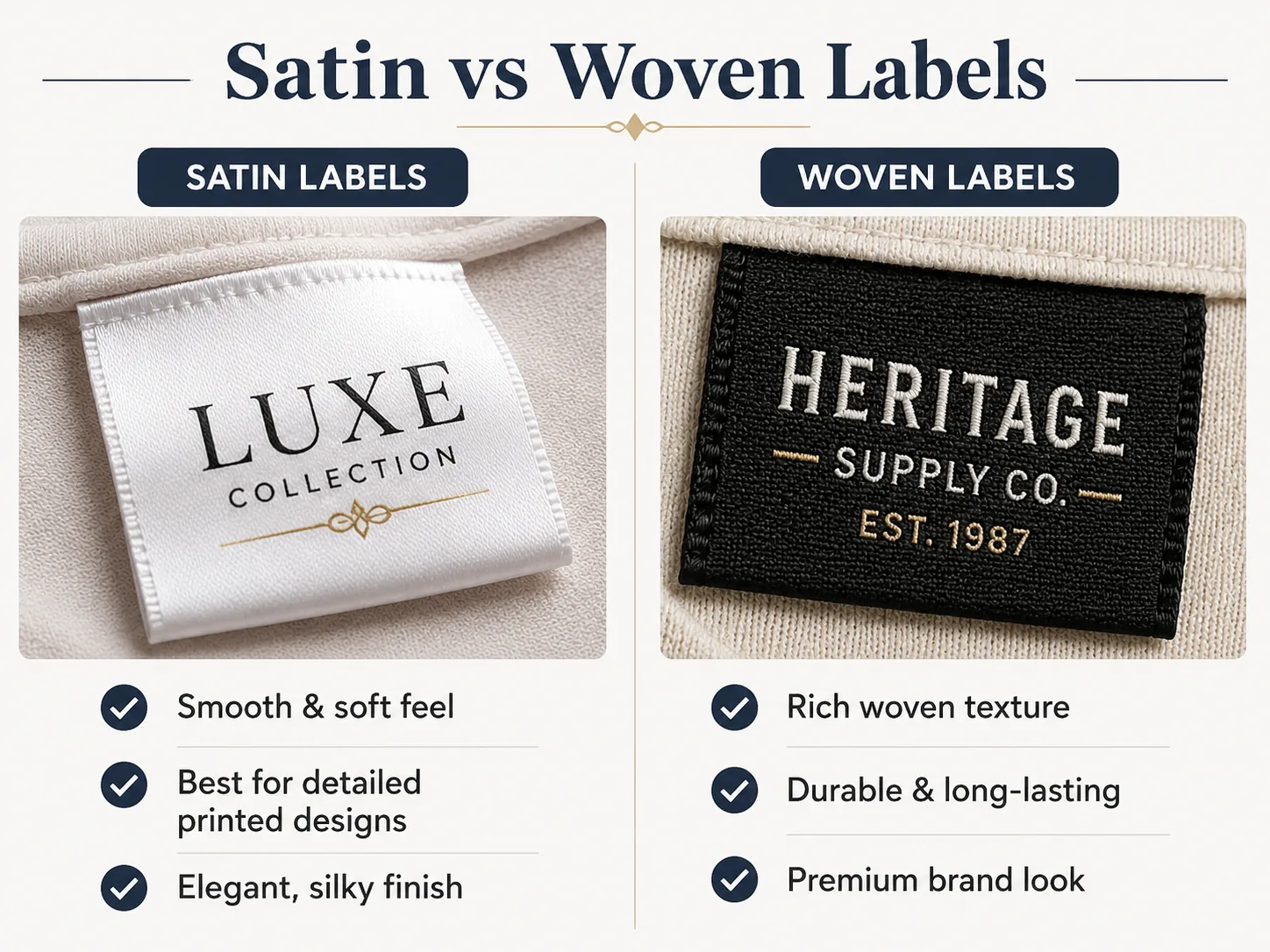
Woven labels are fabric strips with the artwork structurally woven in, then stitched into the garment (typically at the neck or side seam). Colour is permanent because it's part of the weave. Damask is the premium tier of woven.
- Process: jacquard-woven polyester thread
- Setup: no plates needed; loom configuration ~5–7 days
- Feel: fabric texture; can scratch at low-density weave
- Best for: D2C fashion, formal wear, denim, schoolwear, traditional apparel
- Cost: ₹1.10–5.50 per piece depending on volume
Head-to-head — feature comparison
- Zero feel — nothing extra against skin
- Cheapest at very high volumes (10,000+)
- Can't fall off, can't be cut out
- Works on performance fabrics with stretch
- Premium activewear standard
- Expensive at small volumes — plate setup ~₹2,500–5,000
- Can't be removed if design changes
- Limited multi-language space — dense care info is hard
- Plate setup adds 10–14 days to first run
- Less "premium fabric" feel
- Premium fabric feel — visible, brandable
- No setup cost — economical at any MOQ
- Easy to revise artwork between batches
- Handles multi-language wash info via book-fold
- Universal default for fashion
- Can scratch sensitive skin (low-density weave)
- Customers can cut out the label
- Adds bulk inside seams (matters for performance fabrics)
- Falls off if poorly stitched
Cost ladder — where the curves cross
Representative pricing for a 25 × 40 mm neck label position, 2026 (heat-press includes amortised plate setup):
Heat-press is actually cheaper than woven at every MOQ on a unit basis — but only because the plate setup cost (₹2,500–5,000) is amortised across the run. For batches below 200 pieces, the plate setup makes heat-press more expensive than woven; above 200, heat-press wins.
By garment type — which to pick
- Activewear, yoga, athleisure
- Innerwear, underwear, sleepwear
- Performance fabrics with stretch
- Premium kidswear (skin-friendly)
- Garments with chafing-sensitive customers
- D2C contemporary fashion
- Formal shirts & suits
- Denim & outerwear
- School uniforms & workwear
- Traditional apparel where the label is part of the brand
Decision matrix — 30-second pick
Heat-press. Zero label means zero scratching.
Woven. Plate setup makes heat-press economically unviable below this threshold.
Woven. Each artwork change on heat-press needs new plates (~₹2,500-5,000); woven is just a new loom card.
Woven. Heat-press struggles with dense multi-language info; woven can book-fold longer text.
Pro tips before you order
The smart hybrid: heat-press brand mark + woven hem flag. Tagless heat-press at the inside neck (no scratching, premium activewear feel) plus a small woven hem-flag at the side seam (visible brand presence on the rack). Combines invisibility with brand visibility.
Plate setup is amortised — don't pay twice. Once you've paid for heat-press plates, re-runs of the same artwork are cheap. Lock the artwork before plate setup and resist design tweaks for at least 6 months.
Quick start: WhatsApp us your garment type and estimated MOQ. We'll send a heat-press sample and a woven sample of the same artwork, plus an exact per-piece cost breakdown including plate amortisation. Message Labelwala or use the quote form.
The short answer
Heat-press for activewear, innerwear and performance garments where labels shouldn't touch skin. Woven for traditional fashion, formal wear and any brand where the label itself is a visible part of the product. Mix them on the same garment if you want zero skin contact at the neck plus visible woven brand presence at the hem.