Satin and taffeta are the two most common substrates for printed clothing labels in India. They share a process (sublimation print on polyester ribbon) but diverge on almost everything else — feel, sheen, print clarity, durability and cost. Many label buyers use the two interchangeably, only to discover at production that they behave very differently against fabric, in industrial laundry and on export shipments.
This guide compares the two head-to-head: what each is made of, how each behaves, what each costs at every MOQ, and which one belongs on which kind of garment. By the end you'll know exactly when to spec satin and when taffeta is the only sensible option.
At a glance — satin vs taffeta
The picks fall cleanly: satin for the visible brand label where feel matters, taffeta for the long care label where print sharpness matters more than touch.
What is a satin label?
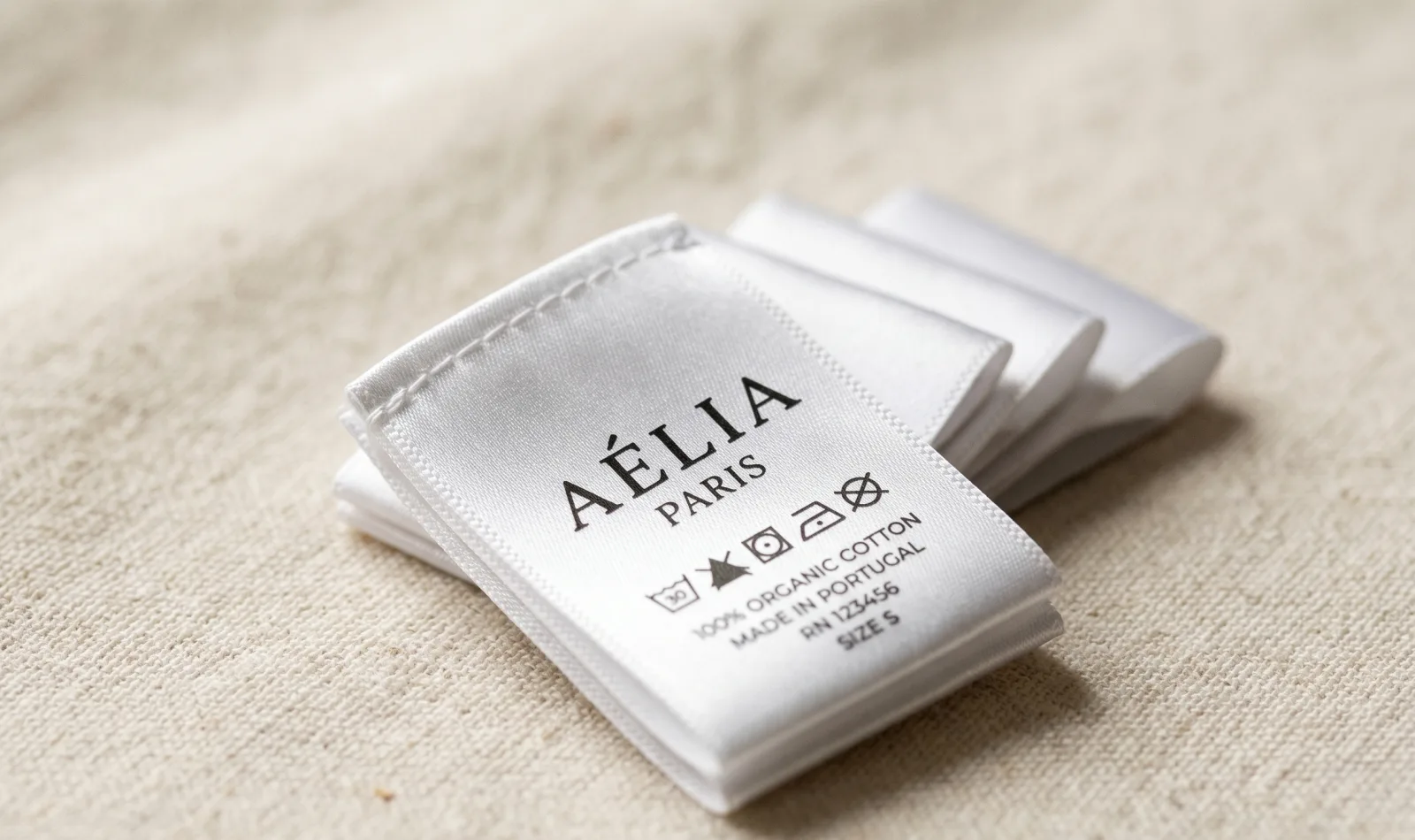
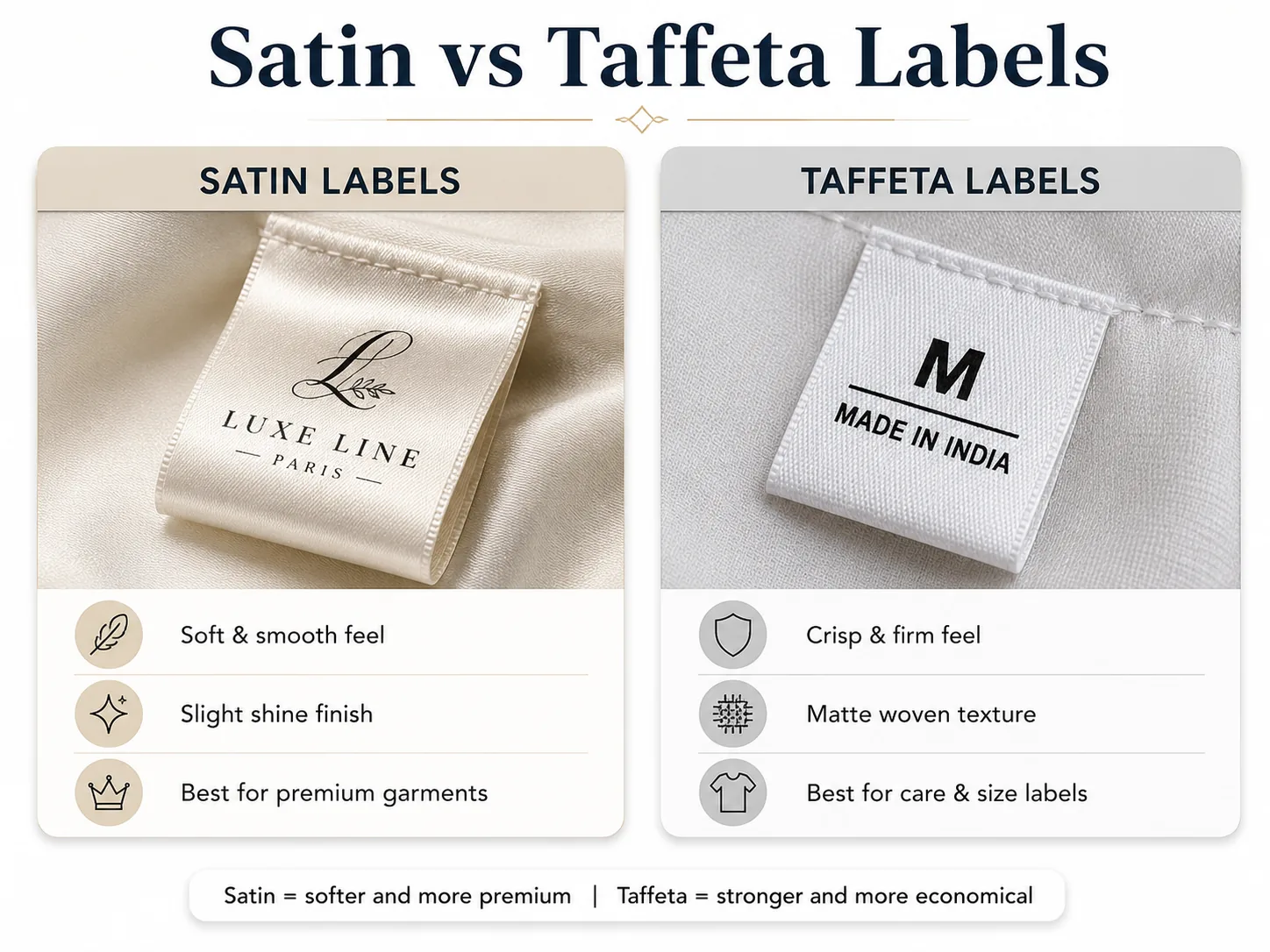
Satin labels are made from polyester ribbon woven in a satin weave — one face glossy (where the print goes), one face matte. The result is a label with a smooth, premium-feeling surface and slight sheen that catches the light.
- Substrate: 100% polyester, 25–35 gsm, satin weave
- Print: dye sublimation (best), or screen print at high volumes
- Feel: glossy, soft, slick against skin
- Best for: visible neck labels, kidswear, contemporary D2C, brand-led artwork
What is a taffeta label?
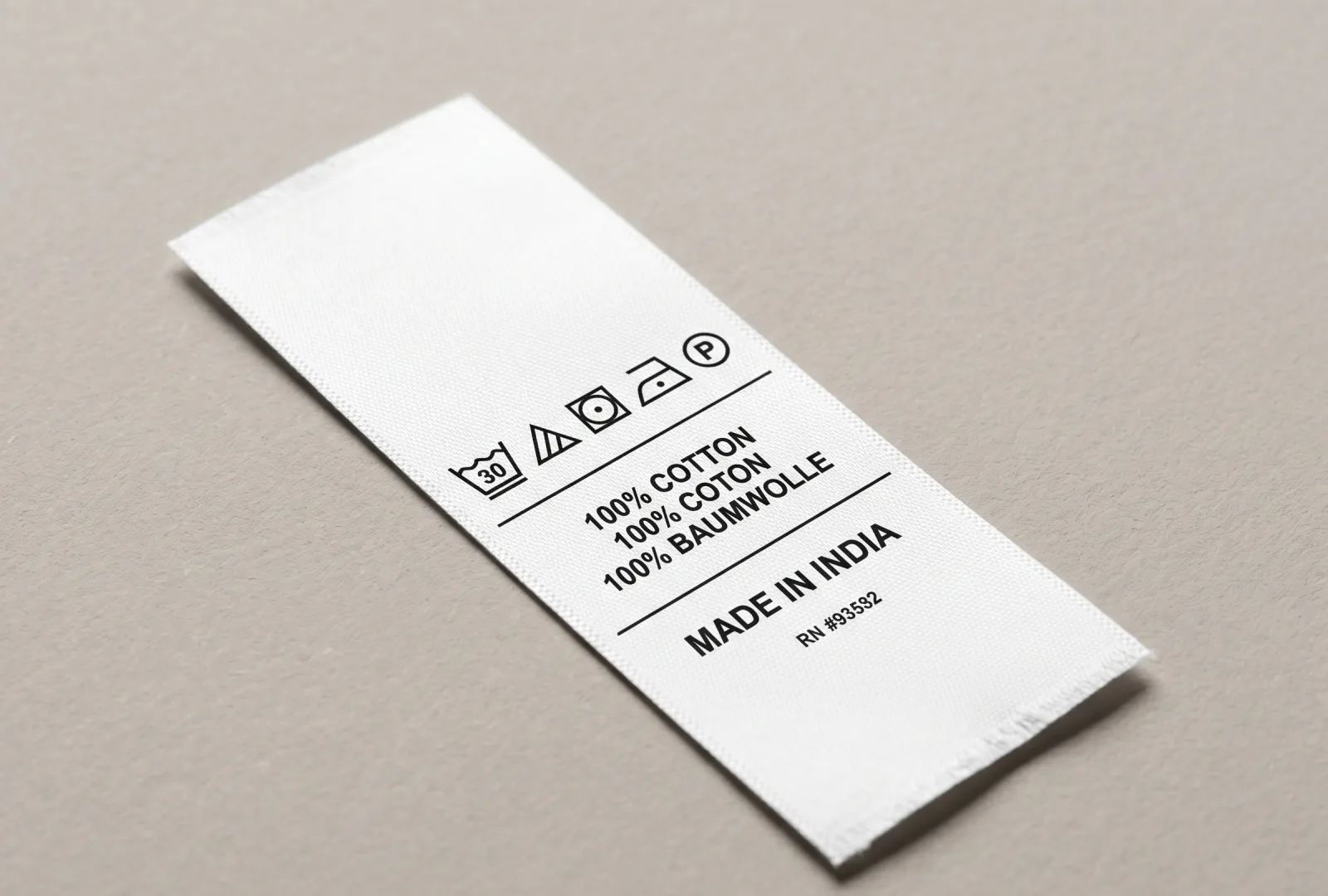
Taffeta labels are made from a tighter, plain-weave polyester or nylon ribbon. The weave is uniform on both faces — no glossy/matte distinction. The tightness gives sharper print edges, especially for tiny text and wash symbols.
- Substrate: nylon or polyester taffeta, 30–50 gsm
- Print: dye sublimation, ISO 3758 compliant for export
- Feel: matte, slightly papery; firmer than satin
- Best for: export care labels, multilingual wash info, industrial laundry environments
For the export-buyer perspective see taffeta labels for garment exporters.
Head-to-head — feature comparison
- Softer against skin — best for visible neck labels
- Glossy face — premium, contemporary feel
- Better for brand-led artwork with gradients
- Mid-tier cost; fast turnaround
- Print slightly softer-edged on tiny text
- Not the ISO-export-default choice
- Sheen can read as "shiny" in conservative formal segments
- Sharpest print — best for tiny wash symbols, multilingual text
- ISO 3758 export-grade default
- Survives industrial laundry (90°C+)
- Cheapest at every MOQ tier
- Firmer, slightly papery against skin
- No sheen — looks less premium on visible brand labels
- Reads as utilitarian on D2C / boutique fashion
Cost ladder — satin vs taffeta
Representative pricing for a 25 × 40 mm centre-fold printed label, 2026:
Taffeta is roughly 30–35% cheaper than satin across every MOQ tier. The gap reflects the simpler weave and faster production speed of taffeta.
By garment type — which to pick
- Visible neck brand labels (premium feel)
- D2C contemporary fashion
- Kidswear (soft against skin)
- Boutique & ethnic-wear brand label
- Brand artwork with gradients or photo detail
- Side-seam care labels with dense info
- Export garments (EU, US, UK)
- Uniform care & size labels
- Hospital, hotel, restaurant linen
- Multilingual wash labels at small sizes
The smart hybrid: use satin for the visible brand label at the neck and taffeta for the long care label at the side seam. You get the premium feel where customers touch and the print sharpness where regulators read.
Decision matrix — 30-second pick
Satin. Its soft, glossy face reads premium and feels smooth. Taffeta is fine at the side seam but firmer on visible neck positions.
Taffeta. The tighter weave keeps tiny text and symbols sharp where satin would blur the edges.
Taffeta. Hotels, hospitals and uniforms benefit from taffeta's heat-resistance and 100+ wash-cycle durability.
Taffeta. The 30–35% savings per piece adds up fast at scale.
Pro tips before you order
Sample both substrates with the same artwork. The same logo can look soft and inviting on satin and sharp and technical on taffeta. Order samples of both before committing to bulk — the comparison takes 5 minutes and saves a re-print.
For export, default to taffeta on the care label. EU and US AQL inspections check ISO 3758 wash-symbol sharpness. A satin care label can fail inspection if symbols read soft-edged; taffeta clears every time.
Quick start: WhatsApp us your artwork and garment type. We'll print 1:1 swatches on both satin and taffeta and ship them in 3 working days. Message Labelwala or use the quote form.
The short answer
Satin for the visible brand label where feel matters. Taffeta for the care label where print sharpness matters. Most well-built production lines use both on the same garment — satin at the neck, taffeta at the side seam. The two aren't rivals; they're complements.