Cotton and taffeta are two label substrates that almost never compete for the same garment — and yet the comparison comes up constantly. Founders launching eco-led brands want to know if they can use taffeta for the care label. Exporters wonder if cotton is GOTS-credible enough to replace taffeta entirely. The answer in both directions is: it depends on what each substrate is actually best at.
This guide compares cotton and taffeta head-to-head: feel, sustainability, print sharpness, durability, certifications, and cost at every MOQ. By the end you'll know whether your brand should be running cotton, taffeta, or a mix — and you'll never confuse the two roles again.
At a glance — cotton vs taffeta
The picks fall along brand-promise lines: cotton when sustainability is part of the brand, taffeta when export-compliance and print sharpness matter most.
What is a cotton label?
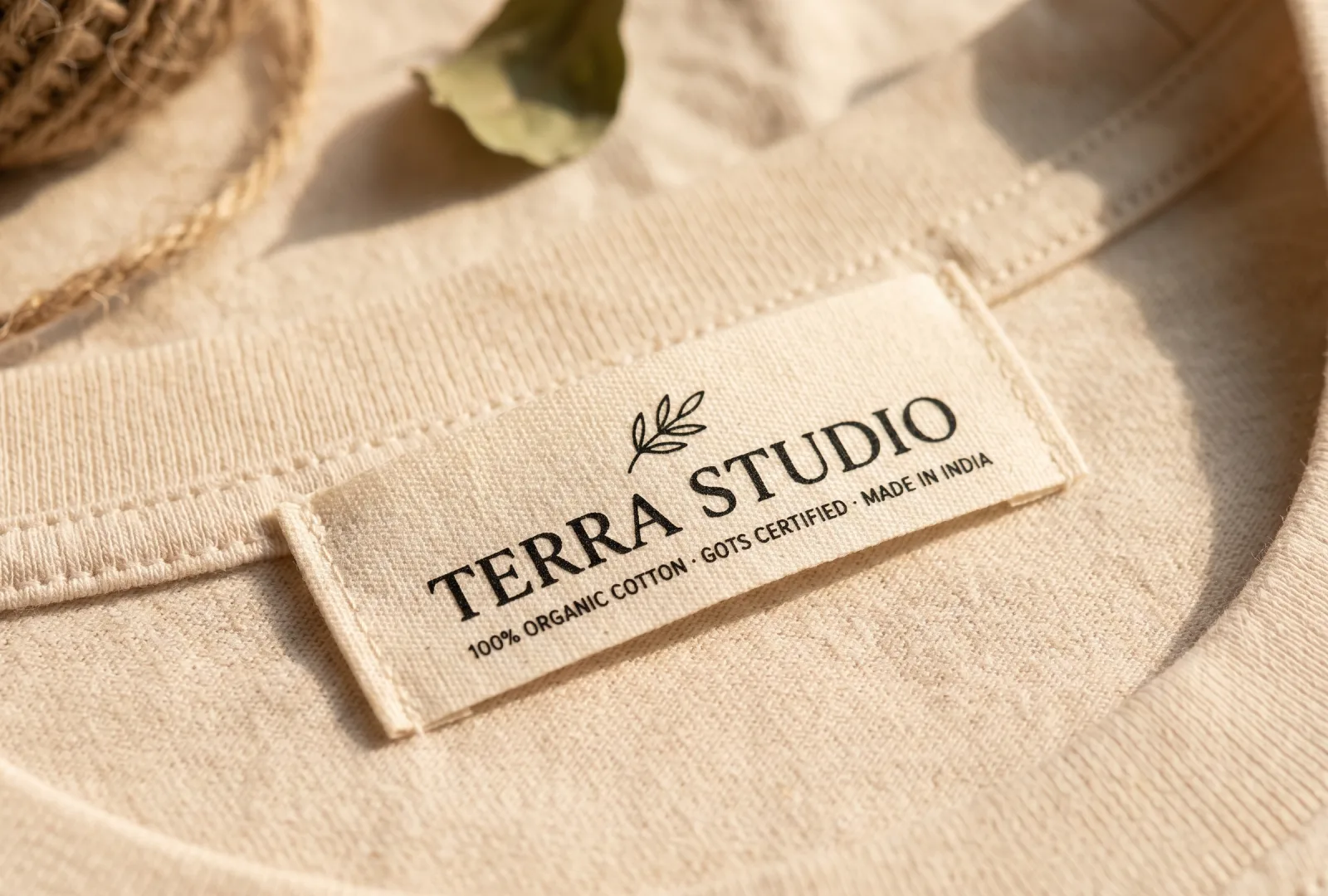
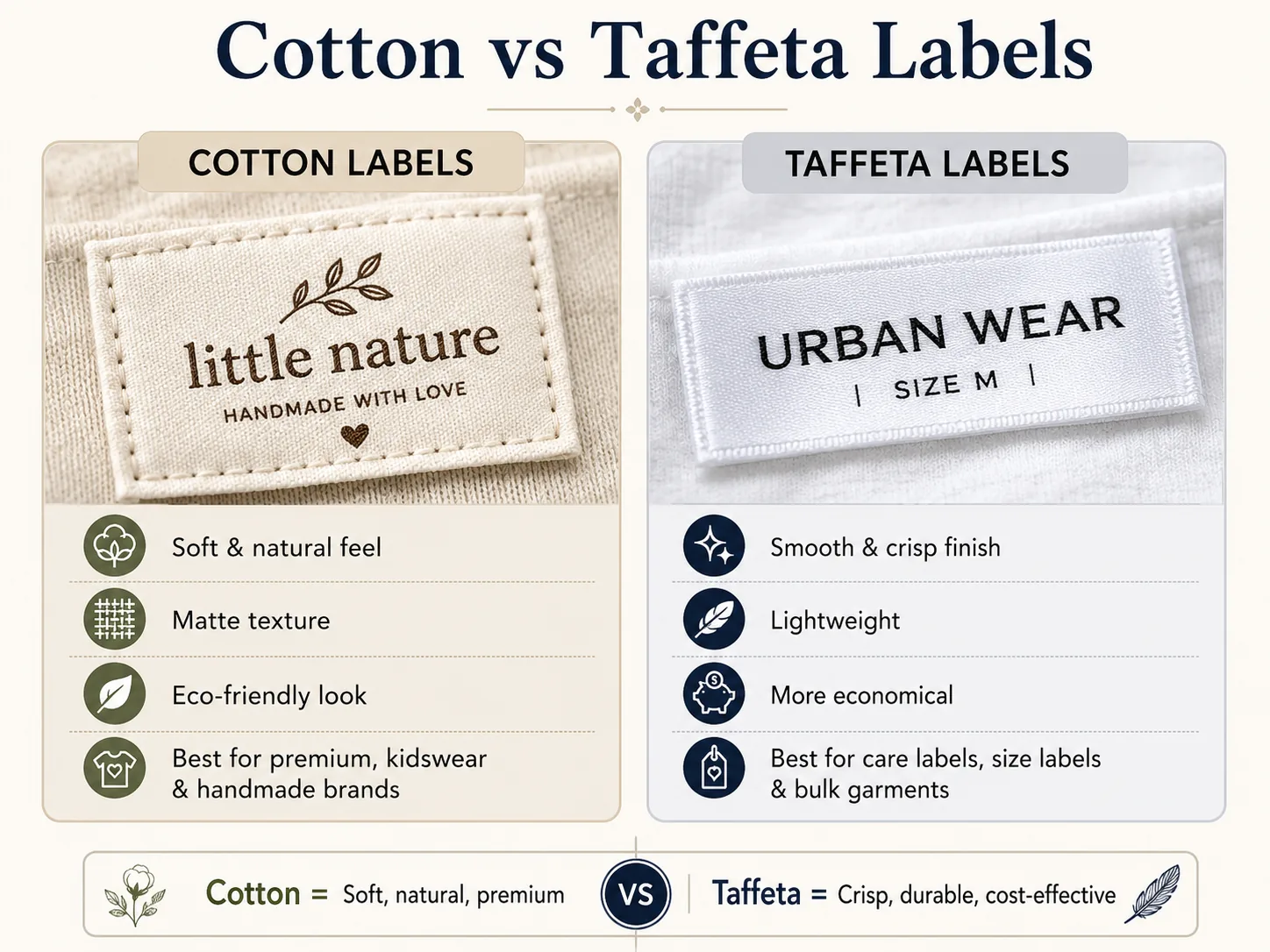
Cotton labels are made from woven or printed cotton tape using combed cotton thread (or GOTS-certified organic cotton). The label is biodegradable, has a warm matte finish, and aligns with eco-conscious branding. Available in both woven and printed formats.
- Substrate: 100% combed cotton (or organic GOTS-certified)
- Process: jacquard woven OR sublimation printed on cotton tape
- Feel: matte, warm, paper-like; soft against skin
- Lifecycle: biodegradable, compostable
- Best for: organic clothing brands, slow-fashion, hemp/linen apparel, eco-led premium
What is a taffeta label?
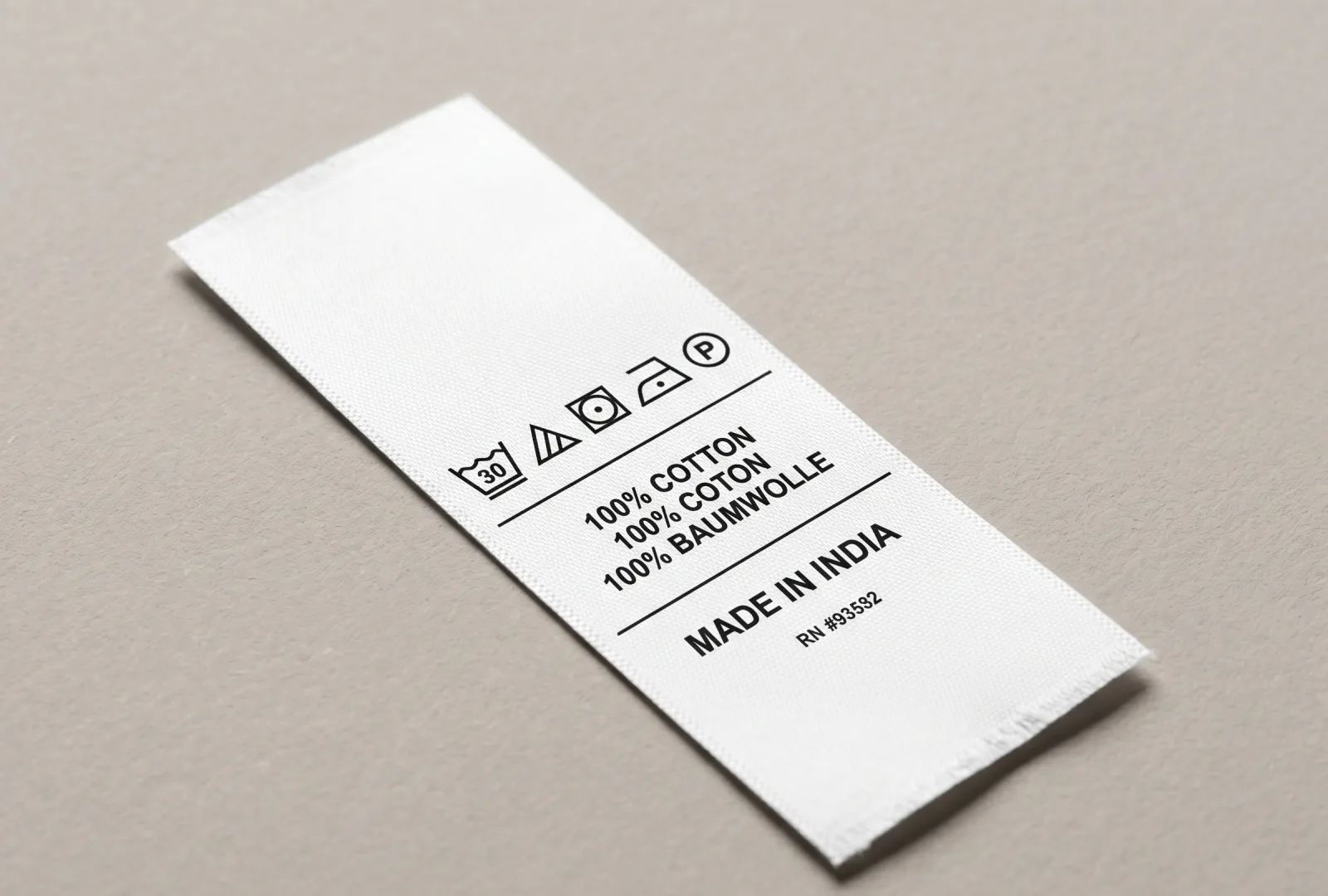
Taffeta labels are made from tightly-woven nylon or polyester with sublimation-printed artwork. The tight weave gives sharp print, especially for tiny text and ISO wash symbols. It's the default substrate for export-grade care labels.
- Substrate: nylon or polyester taffeta, 30–50 gsm
- Process: dye sublimation, ISO 3758 compliant
- Feel: matte, slightly papery; firmer than cotton
- Lifecycle: not biodegradable; recyclable
- Best for: export care labels, multilingual wash info, uniforms, hospitality linen
Head-to-head — feature comparison
- Biodegradable natural fibre lifecycle
- GOTS / Oeko-Tex certifications available
- Aligns with organic / slow-fashion branding
- Warmer, more natural hand against skin
- Reads artisanal, handcrafted
- 2–3× more expensive than taffeta
- Print less crisp than tight-weave taffeta
- Shrinks if not pre-shrunk
- Not the export-industry default
- Fades faster than taffeta under industrial wash
- Sharpest print — tiny text & ISO symbols stay crisp
- ISO 3758 export-grade standard
- Survives industrial laundry (90°C+, 100+ cycles)
- Cheapest substrate per piece
- Stable dimensions — no shrinkage
- Synthetic — undermines eco-fashion claims
- Not biodegradable
- No GOTS certification possible
- Firmer hand against skin
- Reads as utilitarian
Cost ladder — cotton vs taffeta
Representative pricing for a 25 × 40 mm centre-fold label, 2026:
Cotton runs 2.5–3× more than taffeta. GOTS-certified organic cotton adds another 20–30% on top. The premium is steep but justified by the brand promise it carries.
By garment type — which to pick
- Organic / GOTS-certified clothing brands
- Slow-fashion, handcrafted, artisan brands
- Hemp / linen / organic cotton apparel
- Baby clothing (chemical-free skin contact)
- Premium brands where natural fibre is part of the story
- Export care labels (EU, US, UK markets)
- Uniform care & size labels
- Hospitality linen (hotels, restaurants)
- Mass-market apparel at scale
- Garments going through industrial laundry
Decision matrix — 30-second pick
Cotton. A taffeta label inside a GOTS-certified garment is a credibility leak.
Taffeta. EU/US AQL inspections expect ISO 3758 taffeta care labels. Cotton is acceptable but not the default.
Taffeta. Cotton degrades faster under repeated 90°C industrial wash; taffeta survives 100+ cycles.
Taffeta. The 2.5–3× cost difference adds up fast at scale.
Pro tips before you order
Use cotton as the visible label and taffeta as the hidden one. Cotton woven main label at the neck (eco-credibility front-and-centre) plus taffeta-printed care label at the side seam (sharp ISO symbols, export-compliant). Best of both worlds.
Verify GOTS chain-of-custody. Many suppliers sell uncertified cotton tape and pass it off as organic. Ask your supplier for the GOTS scope certificate covering "labels/tapes" specifically before claiming organic certification on the garment.
Quick start: WhatsApp us your brand position (eco-led or export-led) and target MOQ. We'll send samples of both substrates plus a per-piece quote within 4 hours. Message Labelwala or use the quote form.
The short answer
If your brand sells organic, eco or natural-fibre apparel — cotton, full stop. The 2.5–3× cost premium pays for credibility customers will pick up. If you're exporting to EU/US retail or running industrial-laundry garments — taffeta, no contest. For the most defensible setup, use cotton at the visible neck and taffeta at the hidden care label.