
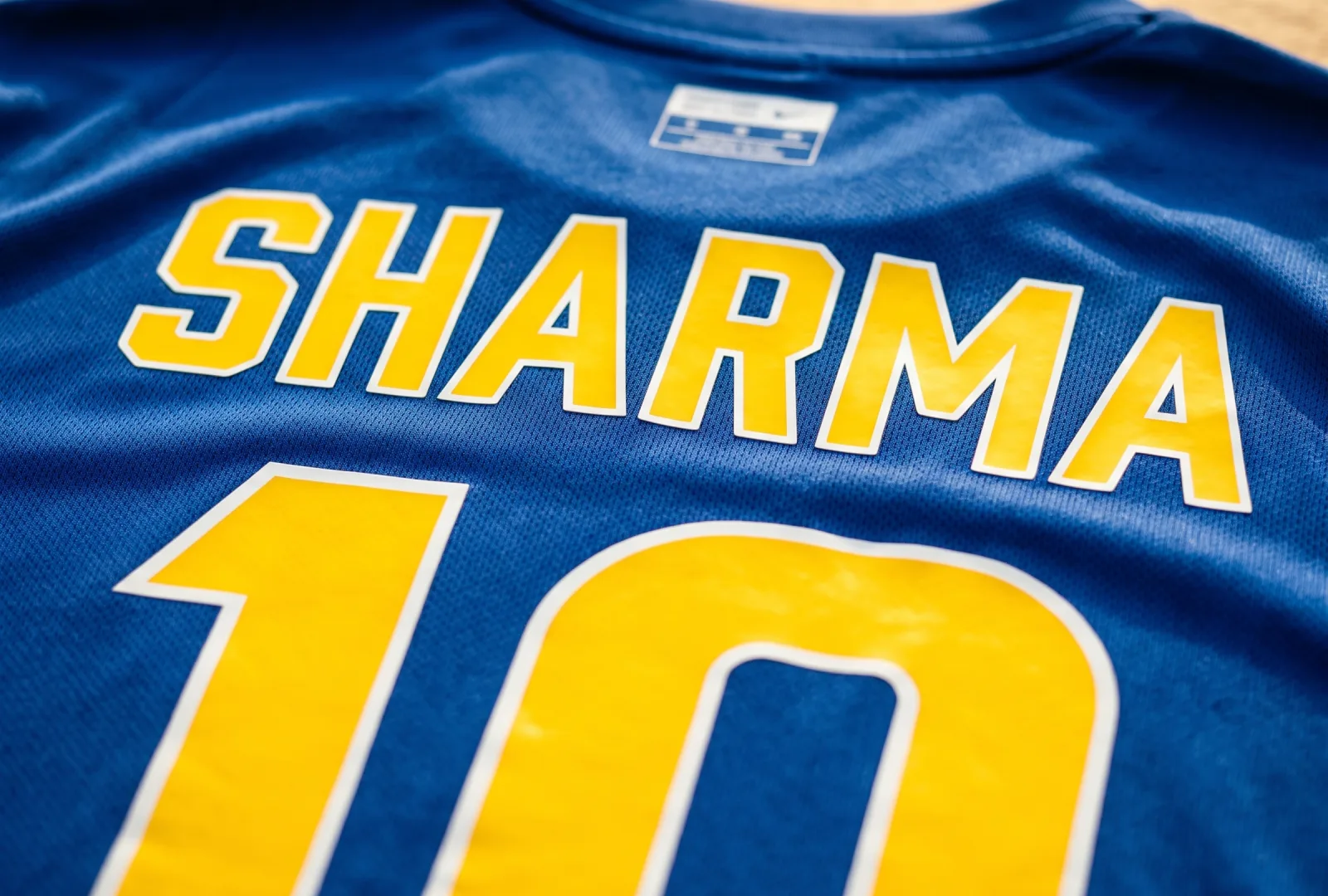
Sportswear labels have a job description no other label has: survive sweat, stretch with the fabric, not chafe at high heart rates, and look good on Instagram after a 60°C wash. A cotton woven label that works perfectly on a kurta will peel off a polyester jersey by week 3. Sportswear needs a different toolkit.
The 4 label types used in sportswear
Different parts of a jersey use different label tech. Each has trade-offs:
- Sublimation print — the design is dyed directly into the polyester fabric. Zero hand-feel, unlimited colours, can't peel. Only works on 100% polyester or high-poly blends. Most professional jerseys use sublimation for player name, number, sponsor logos and team graphics.
- Heat-press vinyl / lettering — pre-cut letters or graphics pressed onto the finished garment. Works on any fabric. Slight raised feel. Best for player names and numbers on cotton or fleece kits.
- Tagless heat-press labels — small printed labels at the inside neck instead of a sewn tag. No itch during play. Standard for premium activewear.
- Woven patches — for club crests, sponsor logos, qualification badges. Sewn or iron-on to the garment. Used when you want a premium, embroidered feel.
A typical team jersey uses 3 of these: sublimated body (or heat-press numbering), a tagless heat-press neck label and a woven club crest patch.
Sublimation vs heat-press: when to use which
Pick sublimation if: you're producing 50+ jerseys from blank polyester, want photo-quality graphics, and have 10+ days lead time.
Pick heat-press if: you have pre-made jerseys you want to add names/numbers to, are doing small batches (1–30 pieces), or need rush turnaround for a tournament.
The player name + number workflow
Most team orders are for player customisation on already-printed jersey bodies. The workflow:
- Collect the team list — full name, kit number, size (S/M/L/XL/XXL). One Google Sheet, one source of truth.
- Lock the font + colour — block-style fonts (Stencil, Impact, custom team font) hold up best. Avoid thin scripts — they crack at heat-press edges.
- Confirm spelling — chase each player for correct spelling before going to production. The single biggest cause of rework: "Suriyanaarayanan" vs "Suryanarayan".
- Produce + press — letter sheets are cut on a plotter, pressed onto each jersey at 150°C for 15s. 20–30 jerseys takes 1–2 days.
For tournaments with substitutes, order 2–3 extra blank numbered jerseys for replacements.
Realistic pricing for sportswear labels
Indicative per-piece pricing for common sportswear label needs:
Sublimation pricing is per full jersey body, not per label — typically ₹250–400 per jersey from blank polyester at 50+ pieces (includes all body graphics, sponsor logos, numbers in one print run).
MOQ for sports teams and clubs
Unlike fashion brands, sports clients often order in small (team-sized) batches but repeat every season. The first order does the spec work; restocks are fast.
Sport-specific label considerations
- Cricket — large back numbers (300mm tall), player name in 50mm arc above. Front pocket logo. Sublimated jerseys are standard at club / corporate level; heat-press for casual teams.
- Football / soccer — back number (250mm), back name in 75mm arc, front chest number (100mm). League rules sometimes mandate fonts and sizes — check before ordering.
- Basketball — both front and back numbers, large (300mm back). Player name optional. Tank tops use sublimation almost universally.
- Marathon / running bibs — separate digital-printed paper bibs with safety pins, not heat-press. Different supply chain.
- School sports day — heat-press house colours + house name on PE t-shirt. Often combined with pre-made name labels for boarding-school kids (see our name & number labels page).
Common sportswear label mistakes: applying woven satin labels to stretchy polyester (label warps and pops stitches); using thin script fonts for player names (cracks on heat-press edges); ordering a team kit without locking the player list first (one wrong spelling costs the whole jersey).
Lead time for sportswear orders
Name + number + size, single source
Per-jersey + total, mockup image · 2h
Heat-press: 3–5 days · Sublimation: 10–14 days
1–3 days transit India-wide
For tournament rush: send the team list at least 7 days before match day for heat-press kits, 15 days for sublimated.
What separates a club kit from a professional kit
The label spec. A casual club kit has heat-press numbers that might peel by season 2. A semi-pro kit has sublimated numbering that lasts the life of the jersey, paired with a woven club crest patch and a tagless heat-press neck label. The cost difference at 25 jerseys: roughly ₹100–150 per jersey. The perception difference: the team looks like it plays a level higher than it does.
For corporate-sponsored teams and school first XIs, the upgrade is worth it. For casual weekend leagues, heat-press only is fine.
Ready to spec your team kit? See the full labels for sportswear brands page, or browse printed labels, woven patches and name & number labels. For pricing, use the price calculator or send a brief via quick quote.