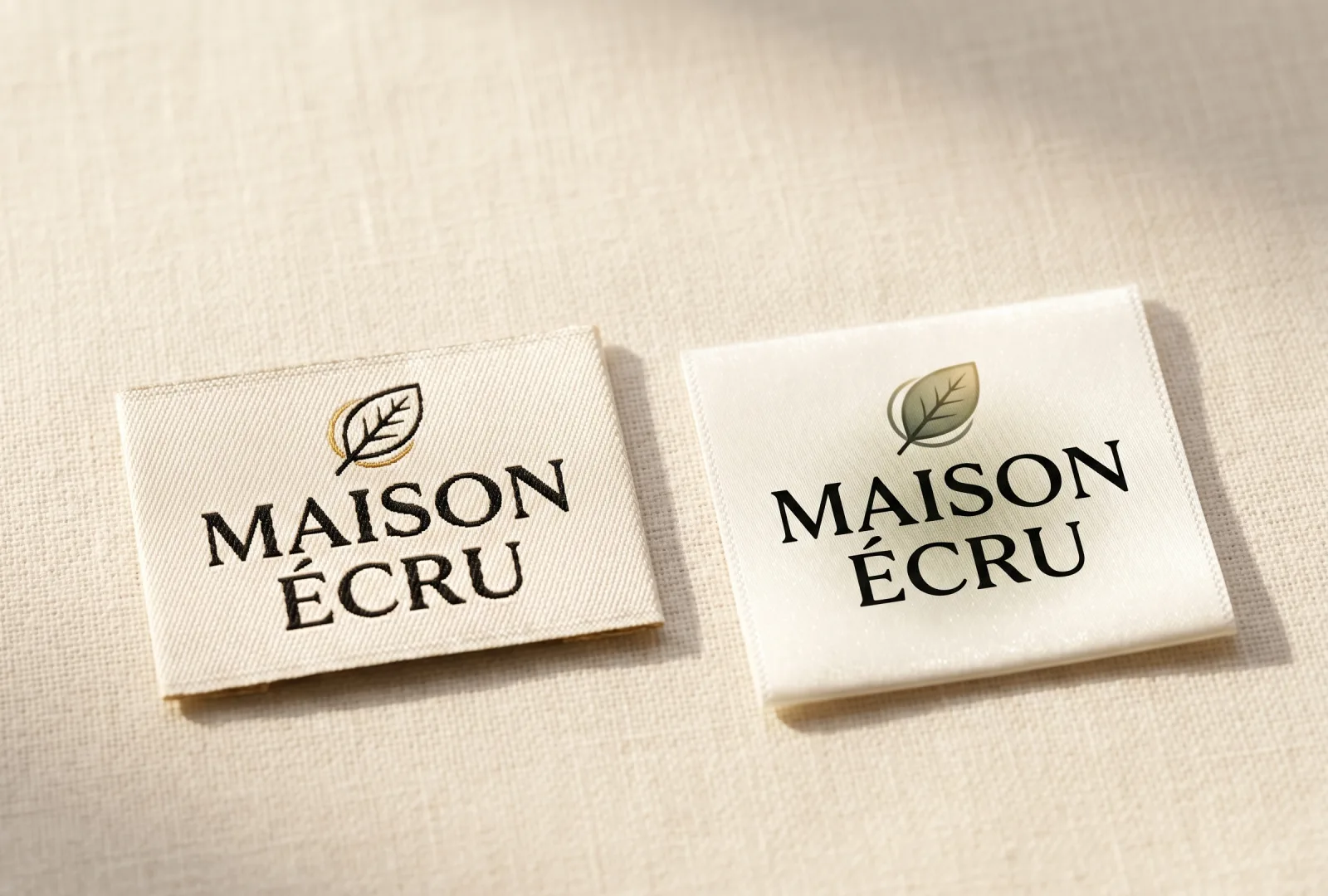
Damask is what people mean when they say "premium woven label." It uses the same jacquard looms as standard woven, but with finer thread, higher stitch density and a satin-finish weave structure that gives the label a silky sheen and intricately rendered detail. The difference between standard woven and damask is mostly invisible at a glance — but it's immediately obvious when you run a fingertip across the surface.
This guide compares the two woven tiers: what changes between them, how much more damask costs, and when the upgrade is worth it. By the end you'll know whether your brand needs to spend the premium or whether standard woven is plenty.
At a glance — woven vs damask
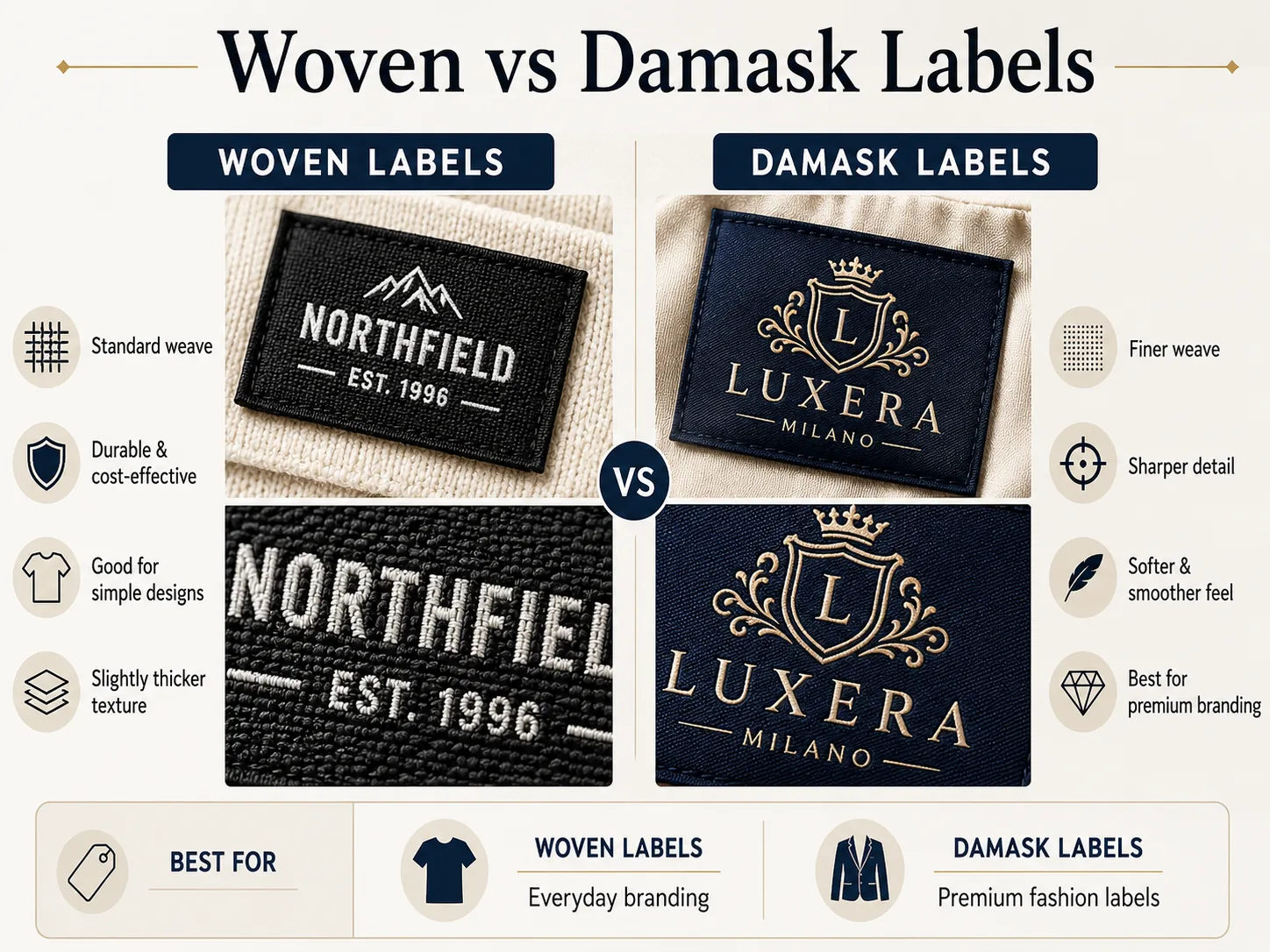
Damask doubles the stitch density. That extra detail gives you finer text, sharper artwork edges, smoother gradients within solid colours, and a noticeably silkier hand. The trade is cost — a 40–60% premium per piece.
What is a standard woven label?
Standard woven labels use polyester thread on a jacquard loom at roughly 6,000 stitches per square inch. Each colour is a distinct thread; the design is structural, woven into the fabric. The result is a permanent, colour-fast label with crisp blocky artwork.
- Thread: polyester, standard denier
- Density: ~6,000 stitches per square inch
- Colours: 1–8 distinct threads; no gradients
- Finish: matte, slight visible weave grain
- Best for: D2C casualwear, sportswear, school uniforms, mid-market fashion
What is a damask label?
Damask labels use finer polyester thread at 10,000–12,000+ stitches per square inch in a satin-weave structure. The high density and satin-weave reflection give the label a silky finish, finer artwork detail, and a more premium feel.
- Thread: polyester, fine-denier
- Density: 10,000–12,000+ stitches per square inch
- Colours: 1–8 distinct threads; finer transitions
- Finish: silky, slight sheen, very fine weave grain
- Best for: luxury fashion, formal wear, heritage brands, premium denim, saree blouse labels
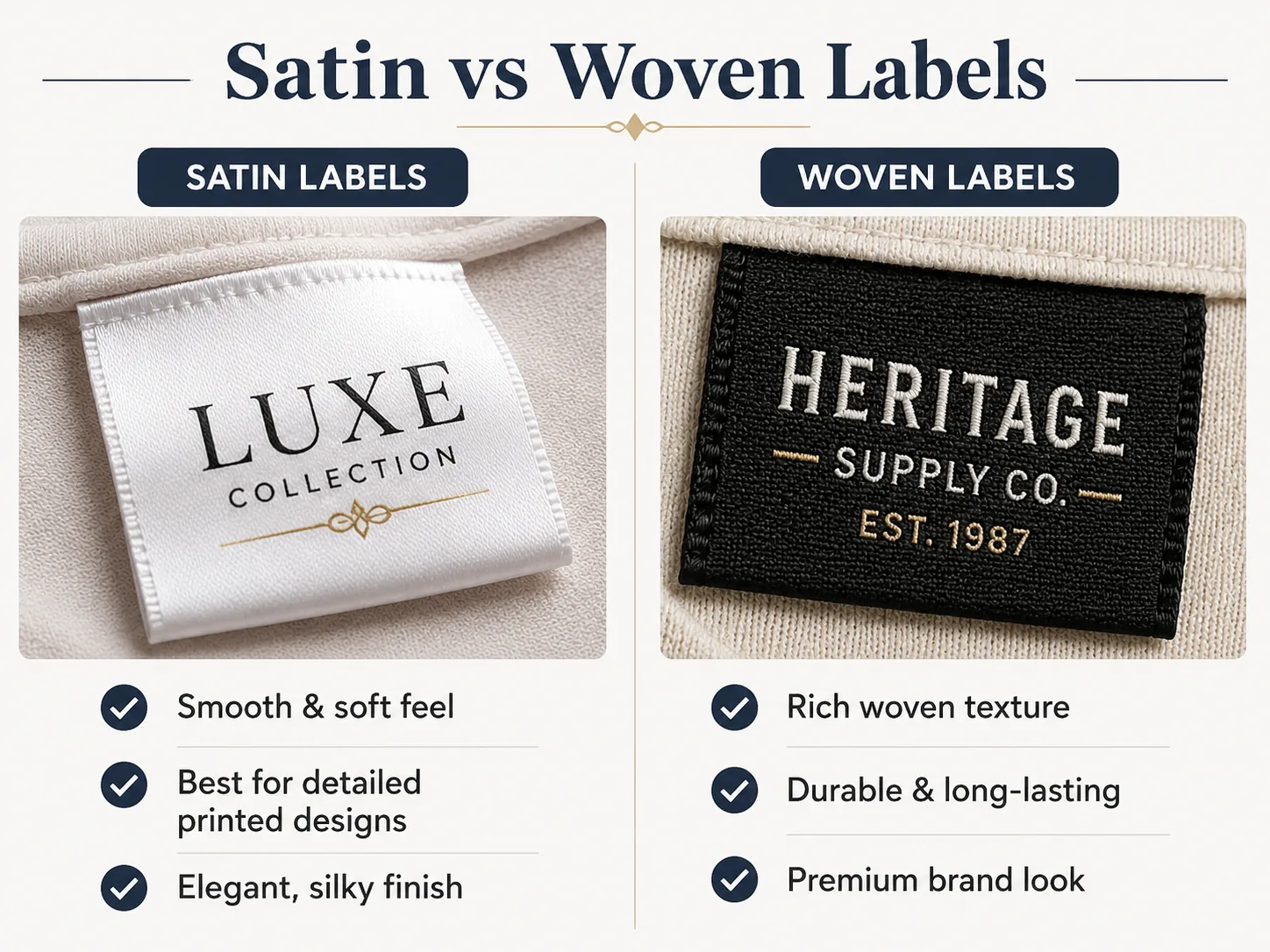
Damask is the closest woven equivalent to satin's premium feel — but it keeps the structural-colour permanence of woven. See damask woven labels.
Head-to-head — what changes
- Finer detail — small type and intricate logo work read clearly
- Silkier hand against skin
- Subtle sheen — reads as luxury
- Cleaner artwork edges
- The default for heritage/premium brands
- 40–60% more expensive than standard woven
- Slower production (more thread per inch)
- The detail is wasted on simple wordmark-only artwork
- Doesn't change perception if the brand doesn't read premium otherwise
- Most economical woven option
- Faster production turnaround
- Plenty for bold, simple wordmark artwork
- Same colour-permanence as damask
- Visible weave grain on close inspection
- Can feel slightly scratchy at low density
- Doesn't reproduce intricate detail as cleanly
- Reads "mid-market" — not "luxury"
Cost ladder — woven vs damask
Representative pricing for a 25 × 40 mm centre-fold woven neck label, 2026:
Damask runs 40–60% more than standard woven. The premium narrows at scale but never disappears — fine thread is more expensive and weaves slower per metre.
By garment type — which to pick
- D2C contemporary fashion (mid-market)
- Sportswear & activewear
- School uniforms & corporate workwear
- Simple wordmark artwork
- Volume orders where every rupee counts
- Luxury fashion & designer wear
- Formal shirts & suits
- Premium denim & outerwear
- Saree blouse & ethnic-wear labels
- Heritage brands with intricate crests
Decision matrix — 30-second pick
Standard woven. The extra detail damask offers is wasted on simple typography.
Damask. At that price point customers notice the label feel — and a standard woven undermines the perceived quality.
Damask. Fine detail (curls, serifs, foliage motifs) reads cleanly only at damask density.
The damask premium narrows at scale — it's often worth the extra ~30% per piece for the brand uplift.
Pro tips before you order
Touch test before you order. The damask vs standard difference is subtle at a glance but immediately obvious by feel. Order one of each at ₹250 sample cost and decide with your hands, not your eyes.
Don't spec damask just because it sounds premium. If your artwork is simple and your retail price is under ₹1,500, the extra cost is brand-positioning theatre — money better spent on a stronger neck label artwork.
Quick start: send us your artwork and target garment. We'll weave both a standard and a damask sample of the same artwork — you can hold them side-by-side before deciding. Message Labelwala or use the quote form.
The short answer
If you're running luxury, formal, premium-denim or heritage fashion above ₹3,000 retail — go damask. The cost premium is justified by the brand feel customers will notice. For everything else, standard woven gives you 80% of the quality at 60% of the cost. Don't pay for damask if your brand doesn't earn it elsewhere.