The satin vs cotton question keeps surfacing in two very different conversations: premium D2C founders chasing a vibrant, full-colour print, and sustainability-led brands who refuse to put polyester anywhere near their garment. Both materials make great labels — but for completely different reasons, and at completely different price points.
This guide compares the two head-to-head: what they’re made of, how they feel, how they print, how they age, what they cost, and which one belongs on which garment. By the end you’ll know whether your brand should be running satin, cotton, or a smart mix.
At a glance — satin vs cotton
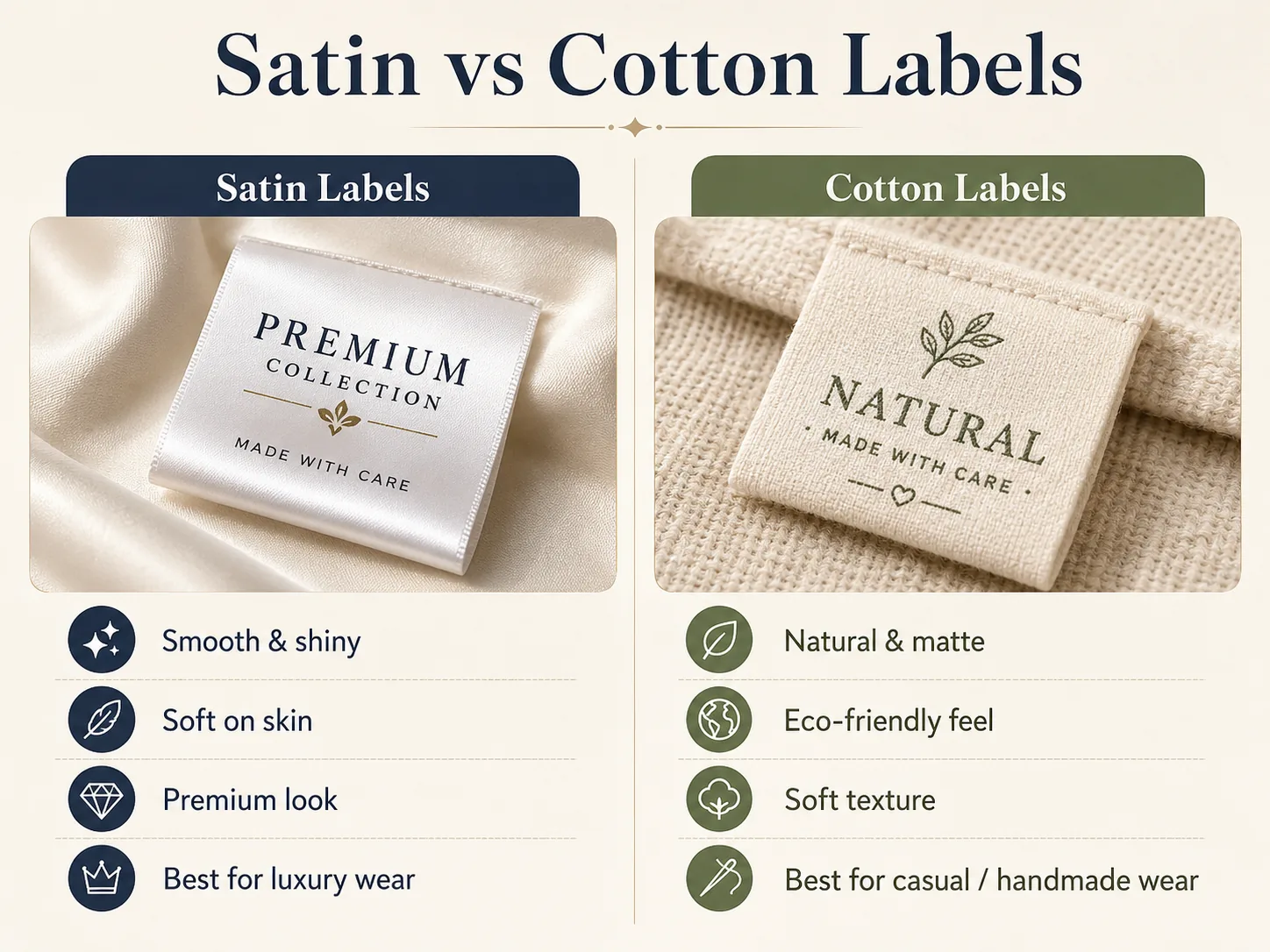
The picks fall along a familiar line: satin for vibrant artwork and contemporary fashion, cotton for natural-fibre alignment and sustainability messaging. Cost, print fidelity and durability behave differently from each other.
What is a satin label?
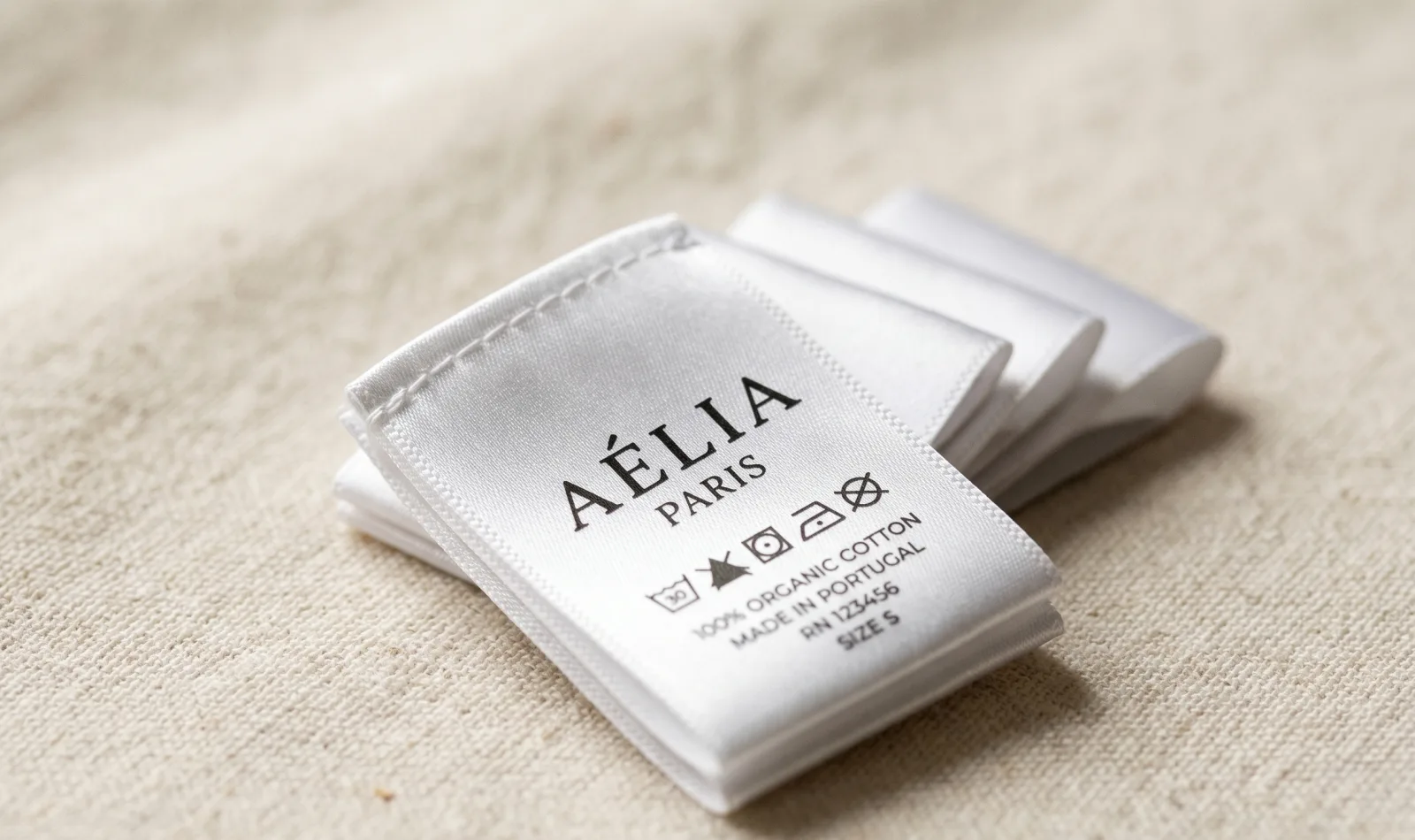
Satin labels are made from 100% polyester ribbon in a satin weave — one face is glossy, one is matte. The brand artwork is sublimation-printed onto the glossy face, where the ink bonds into the fibre. The result is a soft, smooth, vivid-colour label that survives 50+ wash cycles.
- Substrate: polyester, 25–35 gsm
- Process: dye sublimation, sometimes screen print
- Colour: full CMYK, gradients, photographic detail
- Lifecycle: not biodegradable; recyclable if separated from garment
What is a cotton label?
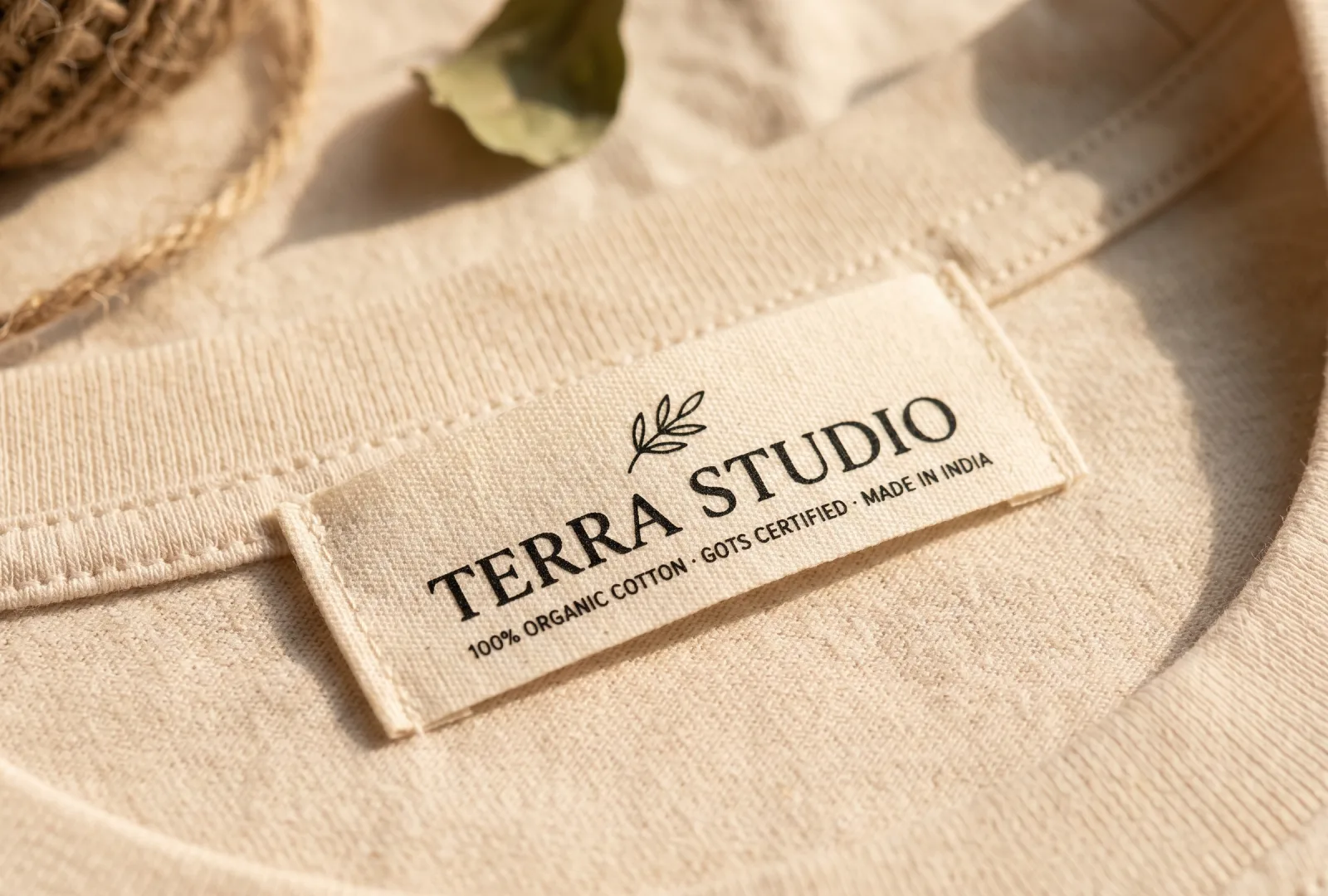
Cotton labels are made from woven or printed cotton tape — typically combed cotton in 100% form, or in a cotton-blend ribbon with a small percentage of polyester for strength. The artwork can be either woven into the fabric or printed onto a flat-weave cotton ribbon.
- Substrate: 100% combed cotton (or organic cotton, GOTS-certified)
- Process: printed (sublimation/screen) or jacquard-woven on cotton thread
- Colour: 1–6 woven colours; full CMYK if printed
- Lifecycle: biodegradable, compostable when separated from garment
Cotton labels are the default substrate for eco-conscious and organic clothing brands. See our deep dive at cotton & organic eco labels.
Head-to-head — feature comparison
- Vivid full-colour print including gradients
- Smooth glossy finish — premium contemporary feel
- Cheaper per piece across all MOQs
- Faster turnaround (5–7 days)
- Wash-fast for 50+ cycles
- Synthetic — doesn’t align with eco-conscious branding
- Not biodegradable; landfill-bound
- Can feel slick rather than warm/natural
- May contradict GOTS-certified organic claims
- Biodegradable, natural fibre — sustainability-friendly
- Soft, warm, paper-like hand
- Aligns with organic and slow-fashion branding
- GOTS / Oeko-Tex certifications available
- Reads as artisanal, handcrafted
- Higher cost — typically 30–60% more than satin
- Print colours less vivid (cotton absorbs ink differently)
- Edges can fray if not heat-sealed
- Shrinks ~3–5% on first wash if not pre-shrunk
- Heavier MOQ on certified organic cotton (300+ pieces)
Cost ladder — satin vs cotton
Representative pricing for a 25 × 40 mm centre-fold neck label, 2026:
Cotton runs ~60–80% more expensive across every MOQ tier. GOTS-certified organic cotton adds another 20–30% on top. That premium buys you eco-credibility — but it has to be earned by the brand story to feel justified.
By garment type — which to pick
- D2C contemporary fashion with vibrant artwork
- Kidswear (soft against skin, low cost)
- Activewear & athleisure
- Mass-market apparel (cost-sensitive)
- Care labels with dense ISO symbols
- Organic / GOTS-certified clothing brands
- Slow-fashion, handcrafted, artisan brands
- Natural-fibre apparel (linen, hemp, cotton)
- Sustainability-led premium brands
- Baby clothing (chemical-free skin contact)
Hybrid tip: some brands use cotton for the visible main brand label and satin for the side-seam care label. This keeps the eco-credibility front-and-centre while controlling cost on the longer care printout.
Decision matrix — 30-second pick
Yes → cotton. A polyester label inside a "100% organic cotton" garment is a credibility leak waiting to be screen-grabbed.
Satin. Cotton flattens vibrant colours and gradients lose their pop.
Satin. The 60–80% cost premium on cotton adds up fast at scale.
Cotton (preferably organic). No synthetic fibres near sensitive skin.
Pro tips before you order
Pre-shrink cotton before bulk. Untreated cotton labels shrink 3–5% on first wash. Specify "pre-shrunk" or "sanforised" cotton tape to avoid puckering issues after the customer’s first laundry cycle.
If you claim "GOTS-certified," verify the chain-of-custody. Many suppliers sell uncertified cotton tape and pass it off as organic. Ask for the GOTS scope certificate of your supplier — it should list cotton labels/tapes specifically.
Quick start: WhatsApp us with your brand position (eco-led or contemporary) and target MOQ. We’ll send side-by-side cotton and satin samples plus a per-piece quote within 4 hours. Message Labelwala or use the quote form.
The short answer
If your brand sells natural fibres, organic apparel or a sustainability story, go cotton — the 60–80% cost premium is the price of credibility. If you’re running mainstream fashion at scale and want vibrant artwork at the lowest viable price, go satin. Many smart brands run both: cotton for the visible neck label, satin for the side-seam care printout.